"What are the standard dimensions and clearances for a luxury walk-in closet?"
Standard Dimensions & Clearances for Walk-In Closets
When designing a luxury closet, the difference between "cramped" and "comfortable" usually comes down to a few inches of clearance. Below are the industry-standard dimensions for layout planning.
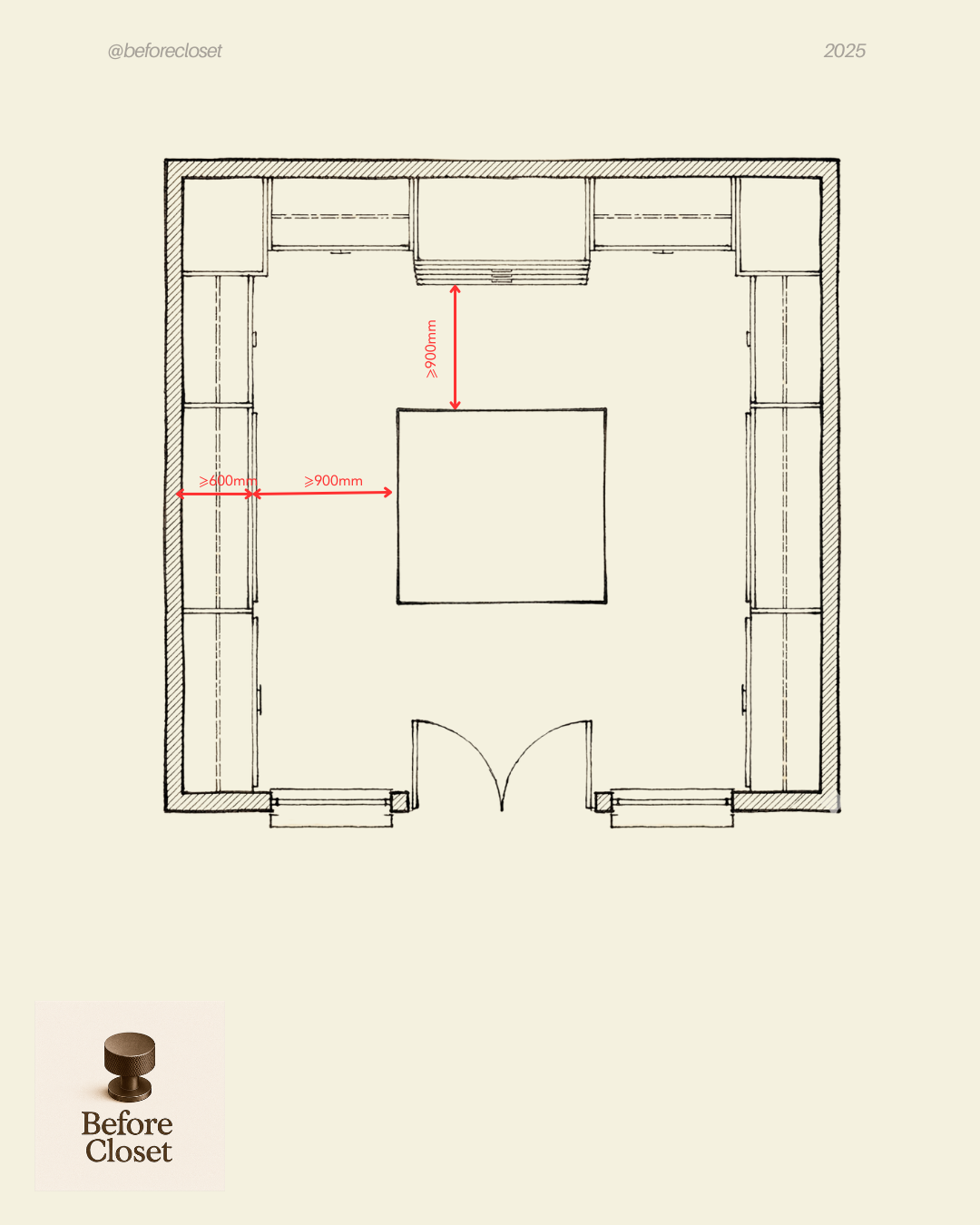
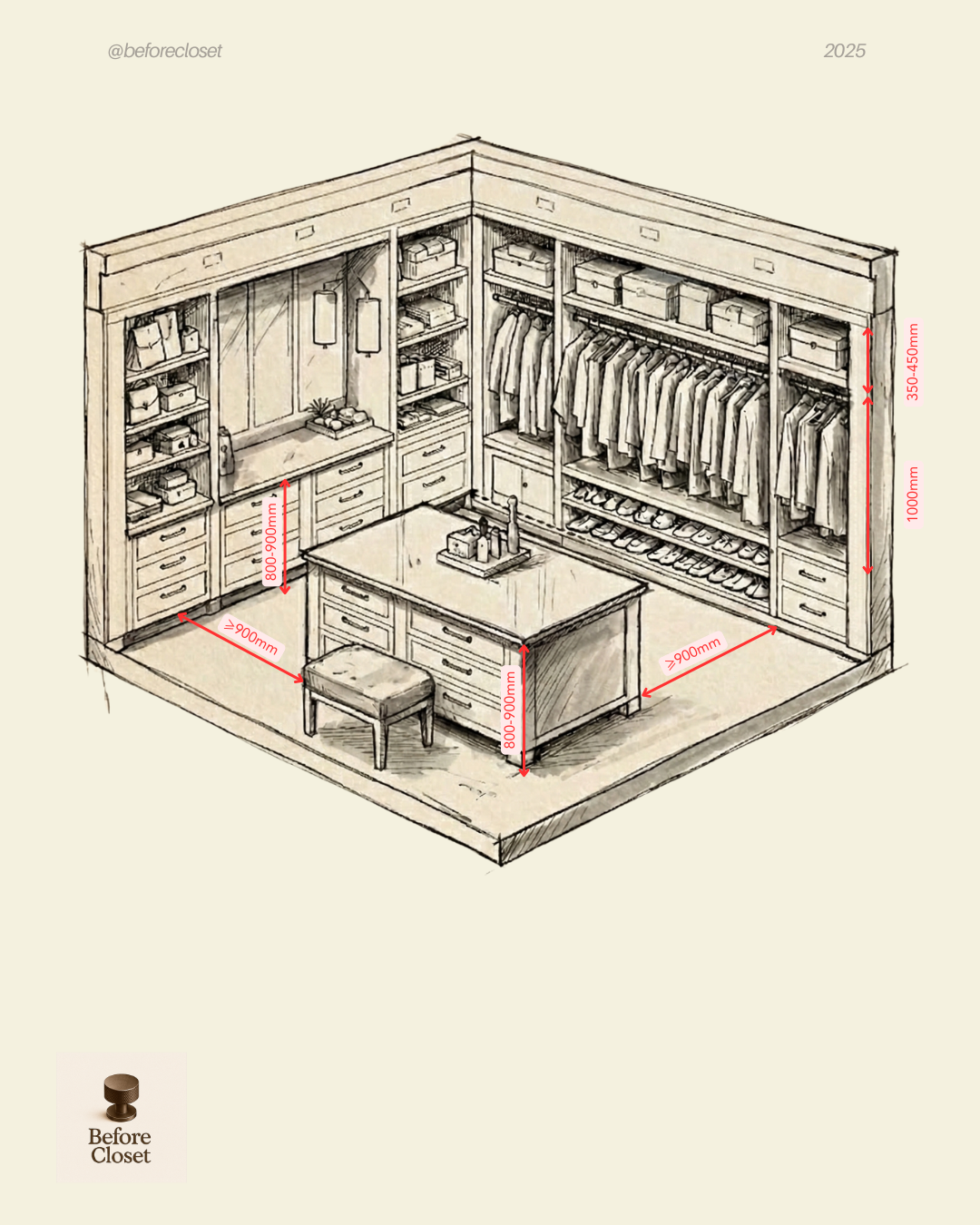
1. The Golden Rules of Clearance (Walkways)
To function properly, a closet requires specific empty space to allow for movement and drawer operation.
Minimum Walkway Width: 24 inches (61 cm). This is the absolute minimum for a single person to walk through.
Ideal Luxury Walkway: 36 inches (91 cm). This allows for comfortable movement and feels "premium."
Island Clearance: 36 inches on all sides. If space is tight, you can reduce this to 30 inches, but anything less will prevent bottom drawers from opening fully while you are standing in front of them.
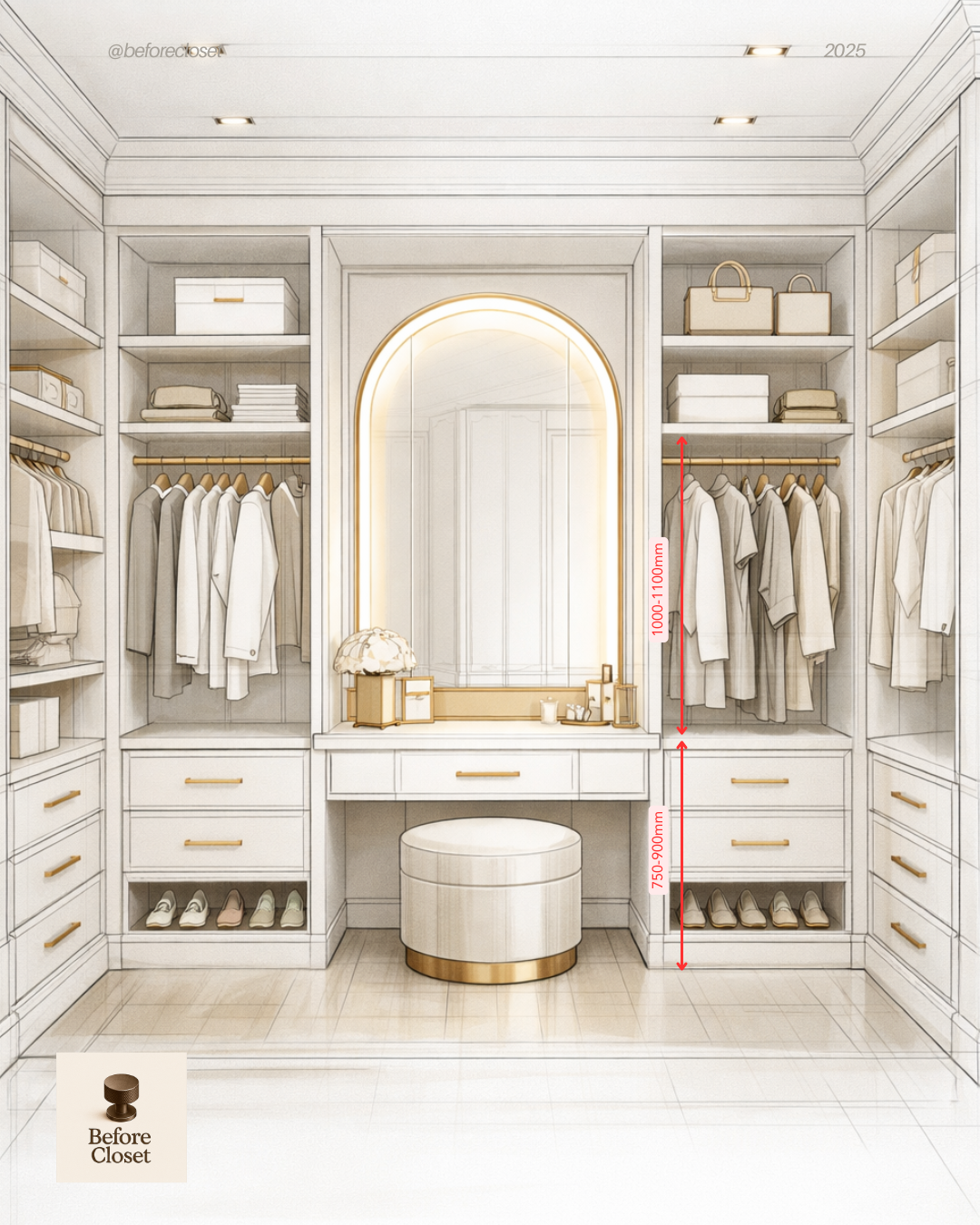
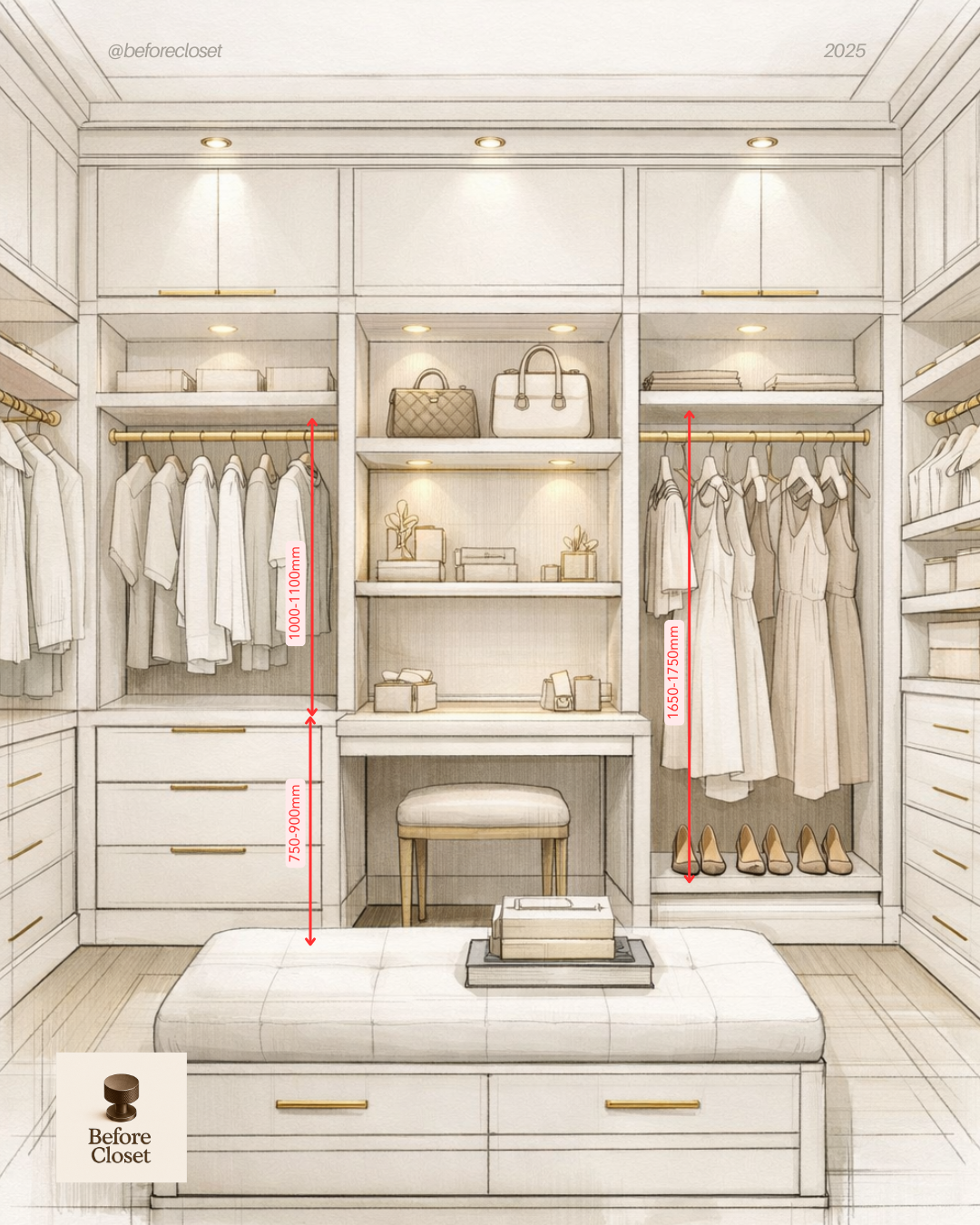
2. Hanging Depths & Heights
Standard cabinetry boxes must accommodate the width of the hangers and the length of the garments.
Standard Closet Depth: 24 inches (61 cm) deep. This ensures clothes do not protrude into the walkway.
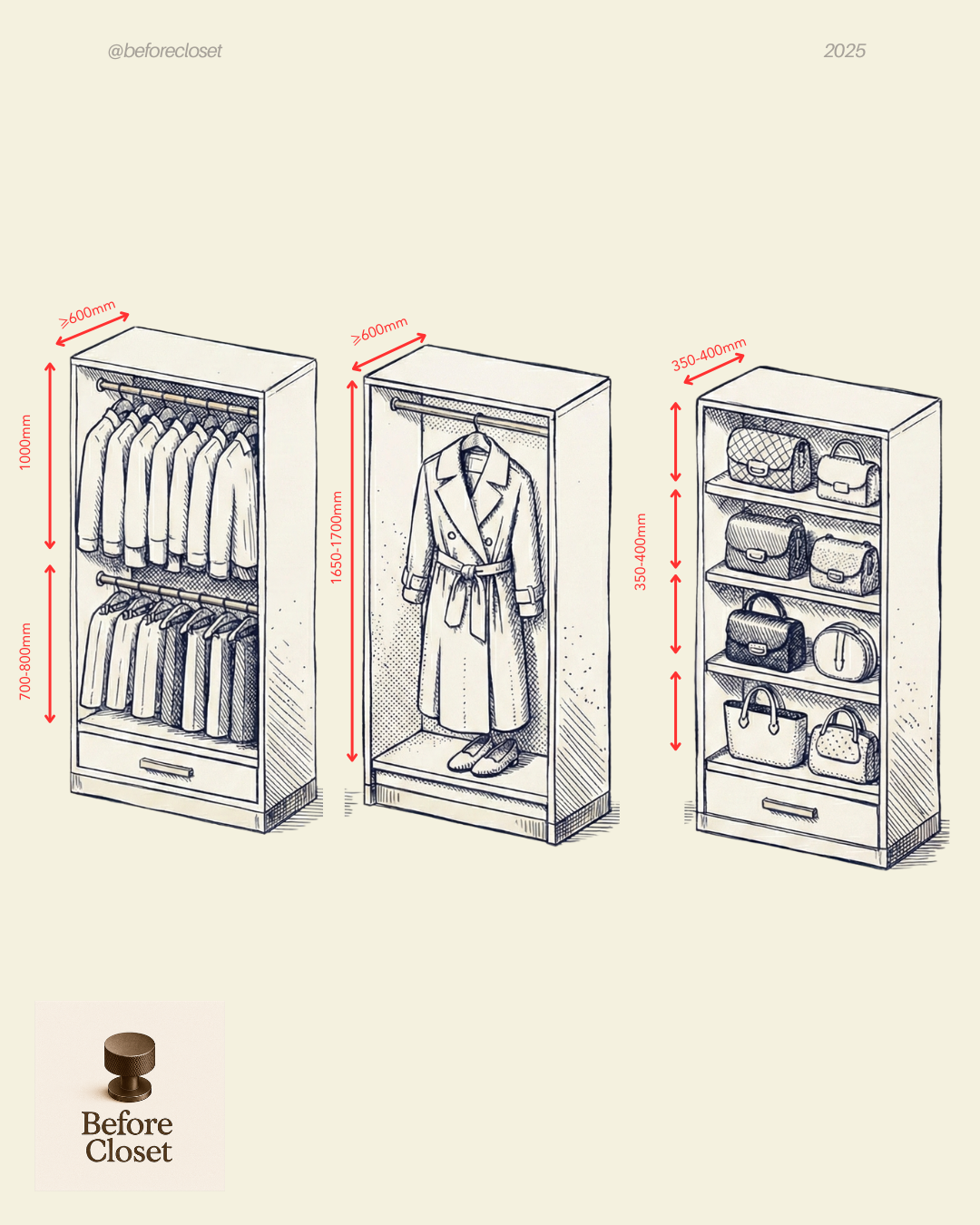
Double Hang (Shirts/Pants): Two rods stacked. The top rod is usually at 84 inches high, and the bottom rod at 42 inches high.
Long Hang (Dresses/Coats): Single rod placed at 66 to 70 inches high.
Shelf Spacing: 12 to 14 inches apart for folded items (sweaters, jeans).
3. The "Shoe Shrine" Standards
Shoe shelving is often designed incorrectly. To maximize display capacity without overhang:
Standard Shelf Depth: 12 to 14 inches.
Flat Shelves: Best for maximizing storage.
Angled Shelves: Best for display (requires a "shoe fence" or heel catch).
Boot Height: Allow 18 to 20 inches of vertical space for tall boots.
4. Technical Hardware Placement
For a polished look, the hardware (knobs/pulls) plays a massive role in ergonomics.
Drawer Pulls: Center them on the drawer front or place them on the top rail for a shaker style.
Long Handles (Pantry Style): For tall wardrobe doors, handles should generally start 36 to 42 inches from the floor (aligned with your hand) and can extend up to 12 inches or longer for aesthetic impact.
หากคุณกำลังออกแบบบ้าน หรือรีโนเวทตู้
และไม่แน่ใจว่าควรเลือก knob หรือ handle แบบใด
Before Closet ยินดีช่วยดูจากแบบหรือหน้างานจริง
เพื่อให้มือจับ “เหมาะกับการใช้งานจริง” ไม่ใช่แค่ดูดีในรูป
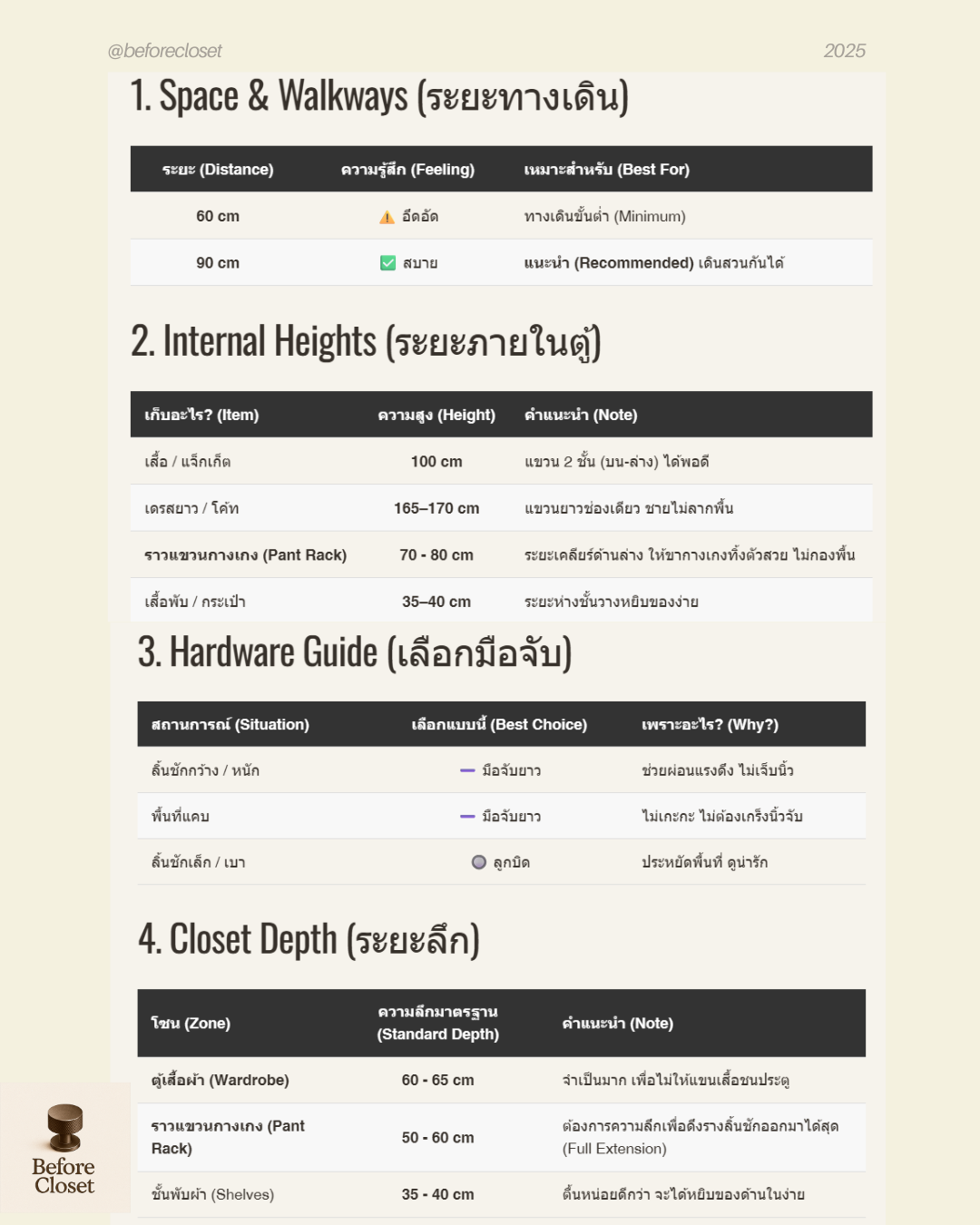
1. Space & Walkways (ระยะทางเดิน)
| ระยะ (Distance) | ความรู้สึก (Feeling) | เหมาะสำหรับ (Best For) |
|---|---|---|
| 60 cm | ⚠️ อึดอัด | ทางเดินขั้นต่ำ (Minimum) |
| 90 cm | ✅ สบาย | แนะนำ (Recommended) เดินสวนกันได้ |
2. Internal Heights (ระยะภายในตู้)
| เก็บอะไร? (Item) | ความสูง (Height) | คำแนะนำ (Note) |
|---|---|---|
| เสื้อ / แจ็กเก็ต | 100 cm | แขวน 2 ชั้น (บน-ล่าง) ได้พอดี |
| เดรสยาว / โค้ท | 165–170 cm | แขวนยาวช่องเดียว ชายไม่ลากพื้น |
| ราวแขวนกางเกง (Pant Rack) | 70 - 80 cm | ระยะเคลียร์ด้านล่าง ให้ขากางเกงทิ้งตัวสวย ไม่กองพื้น |
| เสื้อพับ / กระเป๋า | 35–40 cm | ระยะห่างชั้นวางหยิบของง่าย |
3. Hardware Guide (เลือกมือจับ)
| สถานการณ์ (Situation) | เลือกแบบนี้ (Best Choice) | เพราะอะไร? (Why?) |
|---|---|---|
| ลิ้นชักกว้าง / หนัก | ➖ มือจับยาว | ช่วยผ่อนแรงดึง ไม่เจ็บนิ้ว |
| พื้นที่แคบ | ➖ มือจับยาว | ไม่เกะกะ ไม่ต้องเกร็งนิ้วจับ |
| ลิ้นชักเล็ก / เบา | 🔘 ลูกบิด | ประหยัดพื้นที่ ดูน่ารัก |
4. Closet Depth (ระยะลึก)
| โซน (Zone) | ความลึกมาตรฐาน (Standard Depth) | คำแนะนำ (Note) |
|---|---|---|
| ตู้เสื้อผ้า (Wardrobe) | 60 - 65 cm | จำเป็นมาก เพื่อไม่ให้แขนเสื้อชนประตู |
| ราวแขวนกางเกง (Pant Rack) | 50 - 60 cm | ต้องการความลึกเพื่อดึงรางลิ้นชักออกมาได้สุด (Full Extension) |
| ชั้นพับผ้า (Shelves) | 35 - 40 cm | ตื้นหน่อยดีกว่า จะได้หยิบของด้านในง่าย |